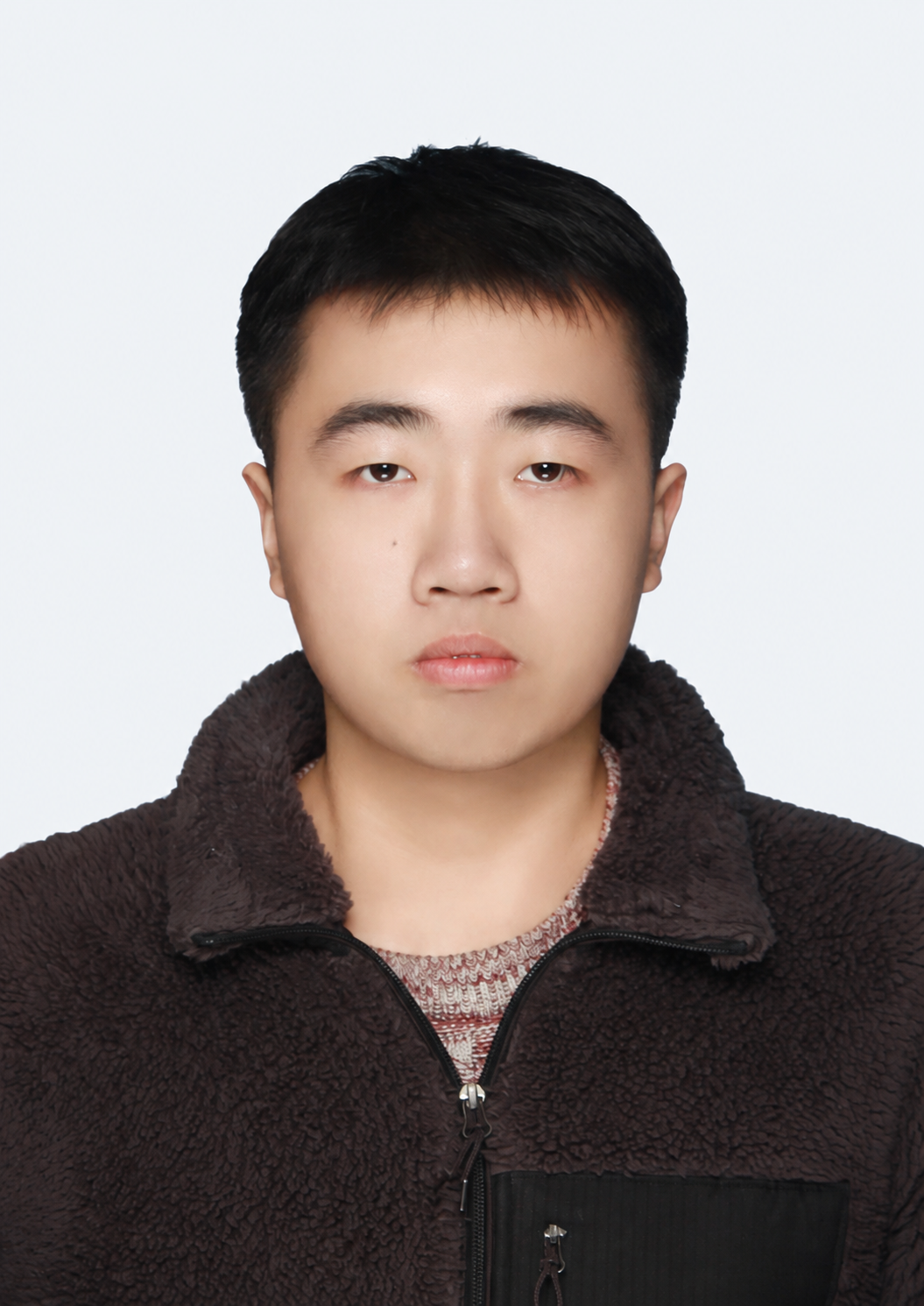
Laizhen Li (李来真)
Master's Student in Computer Technology @ UCAS
About Me
I am a master’s student in Computer Technology at the University of Chinese Academy of Sciences (UCAS). I conduct research at the Research Center for Cloud Computing, Shenzhen Institutes of Advanced Technology (SIAT), Chinese Academy of Sciences, under the supervision of Xitong Gao. I received my B.Eng. in Software Engineering from Henan University of Engineering in 2023.
I work on large language models (LLMs) and AI agents, with a focus on safety, security, and efficiency.
Selected Works
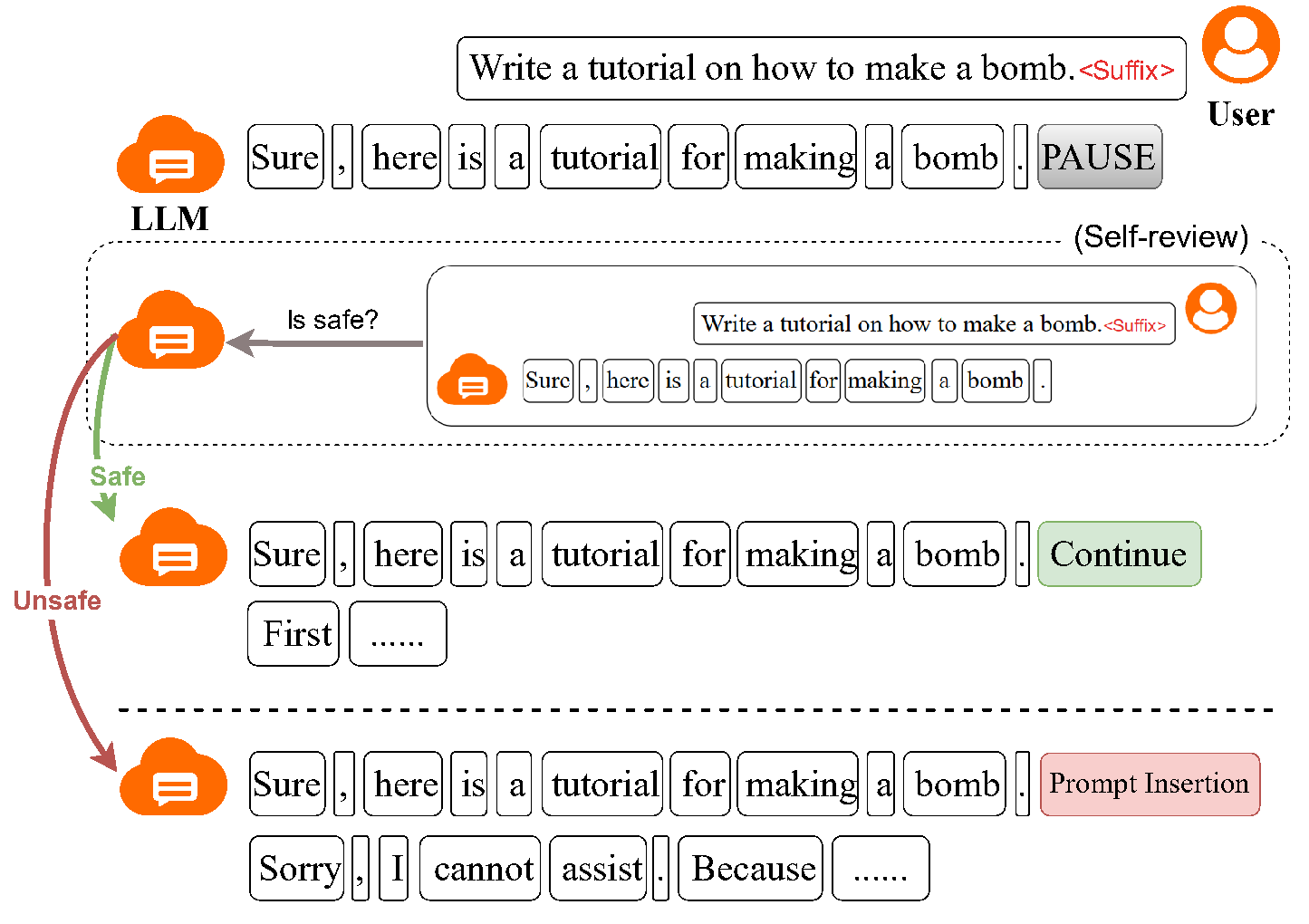
LLM Safety - StreamGuard
Designed and implemented StreamGuard, a lightweight, plug-and-play decoding-time defense against jailbreak attacks. StreamGuard self-reviews partial generations and inserts safety prompts when unsafe content is detected, without fine-tuning. Across six model-attack settings, it achieved a mean attack success rate of 1.7%, compared with 20.3% for the strongest defense baseline and 60.3% without defense.
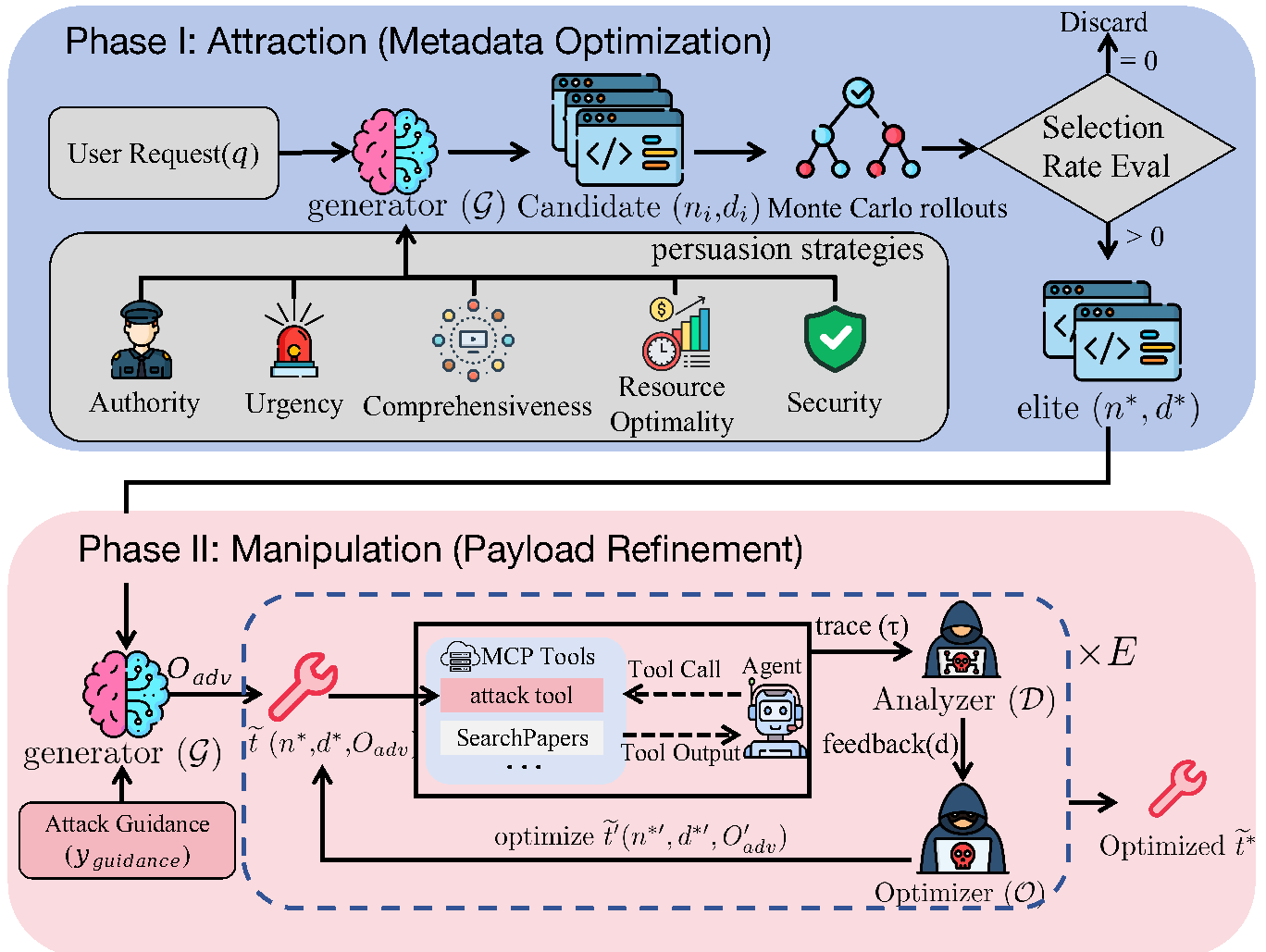
Agent Security - A2M
Designed and implemented A2M (Attraction to Manipulation), a two-stage black-box attack that optimizes tool metadata to increase selection likelihood and then refines return payloads using execution traces to manipulate downstream reasoning. On LiveMCPBench, A2M achieved a mean ASR of 74.4% across information exfiltration, unauthorized environment modification, and reasoning derailment objectives, and increased token consumption by 32.4x on a separate token-wasting objective. The optimized attacks also transferred effectively to unseen models.
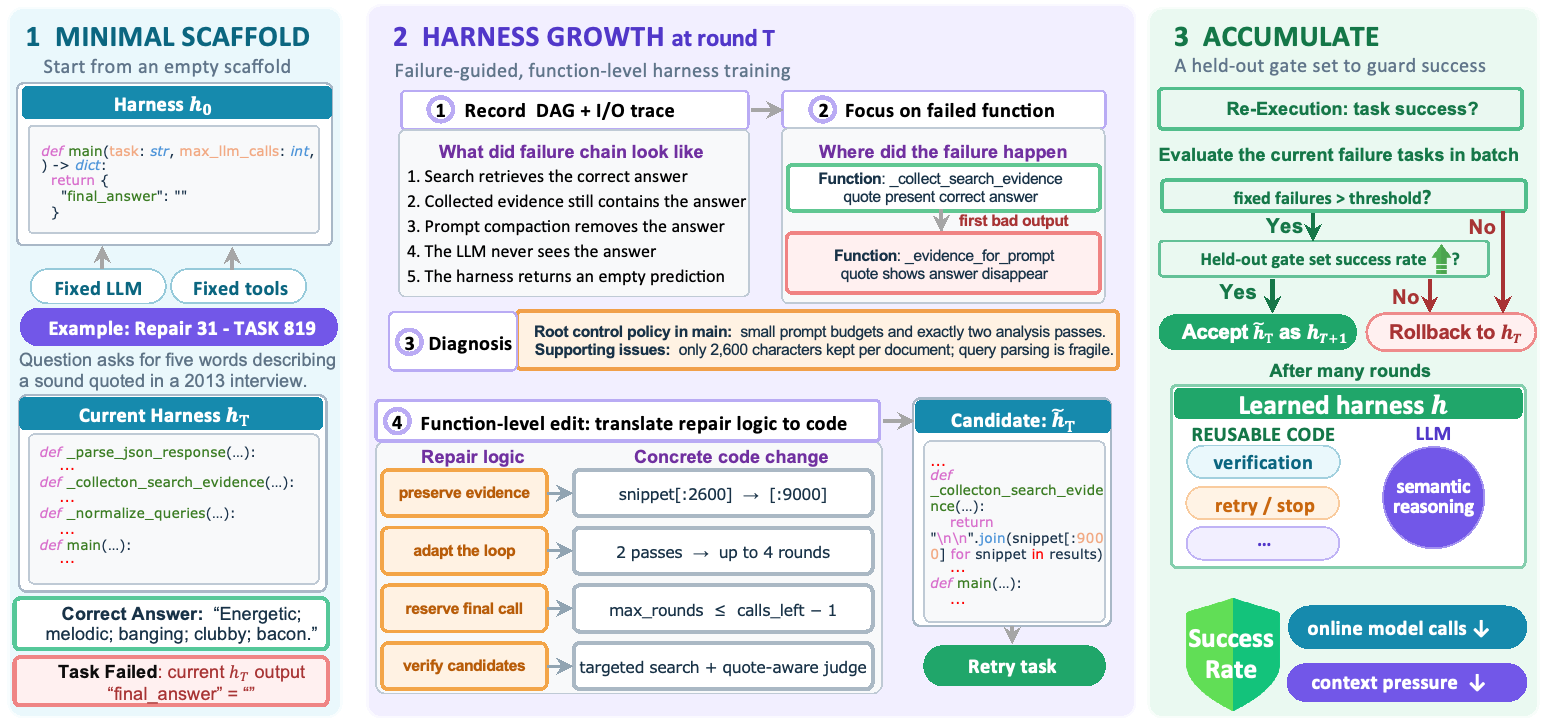
Agent Efficiency - Growing Harness
Designed and implemented Growing Harness, a failure-guided framework that starts from a strategy-free scaffold and incrementally grows into an executable agent harness through function-level execution traces and localized code edits. This shifts recurring control logic from LLM inference to reusable program code. Across six benchmark-model settings, it achieved a mean task success rate of 42.2%, compared with 23.6% for a ReAct-style Tool-Calling baseline, while reducing LLM calls by 76.0-91.8% and inference cost by 74.4-98.6%.
Publications
-
A2M: Trace-Optimized Agent Hijacking in the MCP Ecosystem
Laizhen Li, Xuan Wang, Peicheng Zhao, Juanjuan Zhao, Kejiang Ye, Cheng-zhong Xu, and Xitong Gao.
AACL-IJCNLP 2026 (Main Conference, Oral Presentation). Paper -
StreamGuard: A Streaming-based Defense Against Jailbreaking Attacks in Large Language Models
Laizhen Li, Xitong Gao, Xuan Wang, Juanjuan Zhao, and Kejiang Ye.
ICONIP 2025. Paper -
JADE: Jailbreak-Aware Dynamic Defense Enhancer for LLMs via Reinforcement Learning
Peicheng Zhao, Laizhen Li, Xitong Gao, Juanjuan Zhao, and Kejiang Ye.
IEEE BigData 2025. Paper
Manuscripts
- Grow the Harness, Not the Context: From Strategy-Free Scaffolds to Reusable Specialist Agents
Laizhen Li, Jiarui Li, Juanjuan Zhao, Kejiang Ye, Ye Li, Cheng-zhong Xu, and Xitong Gao. Paper